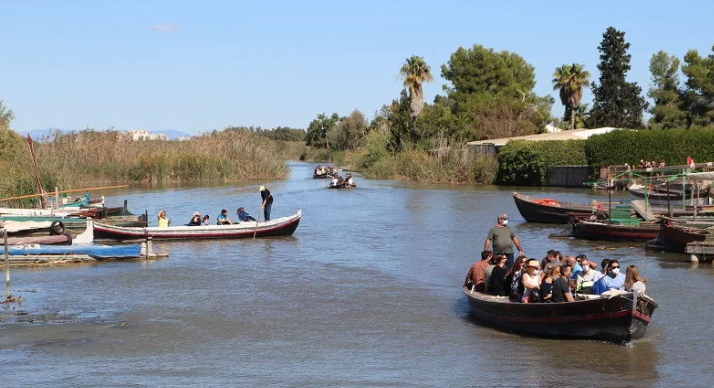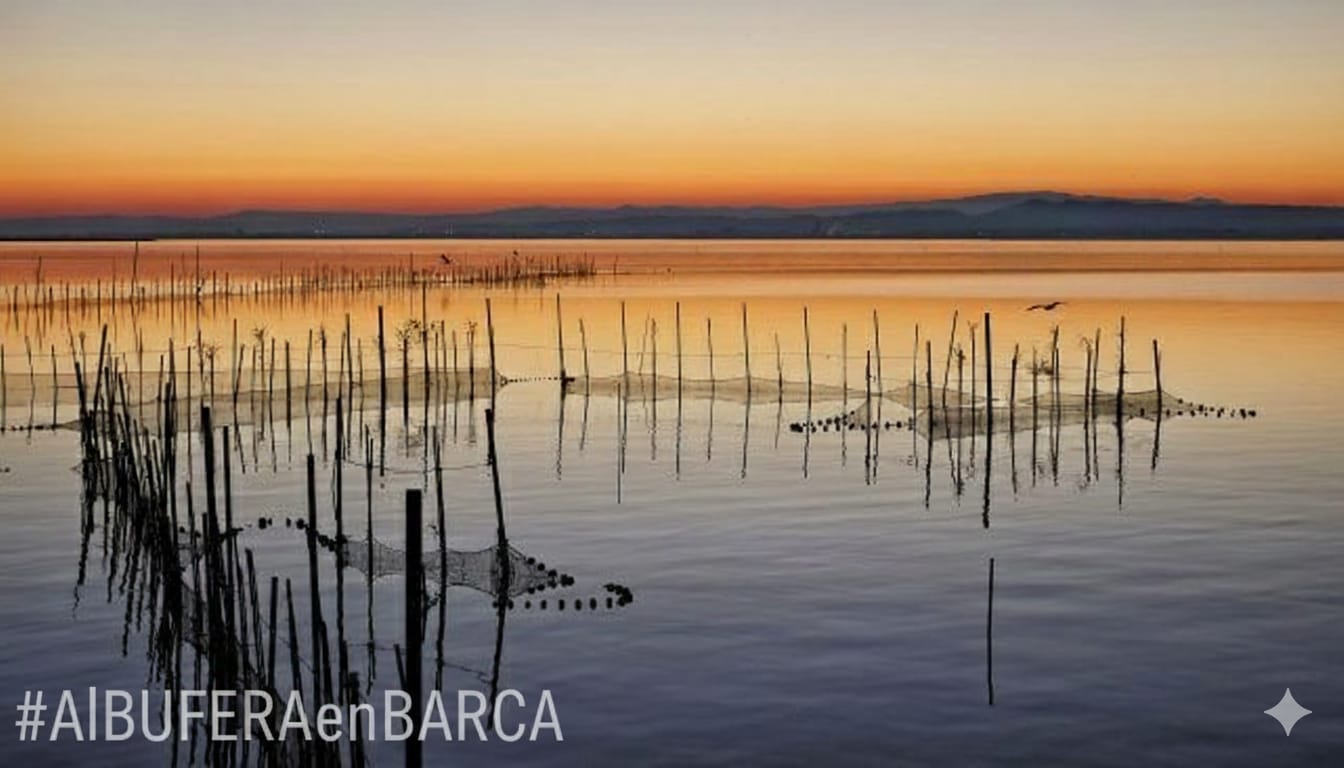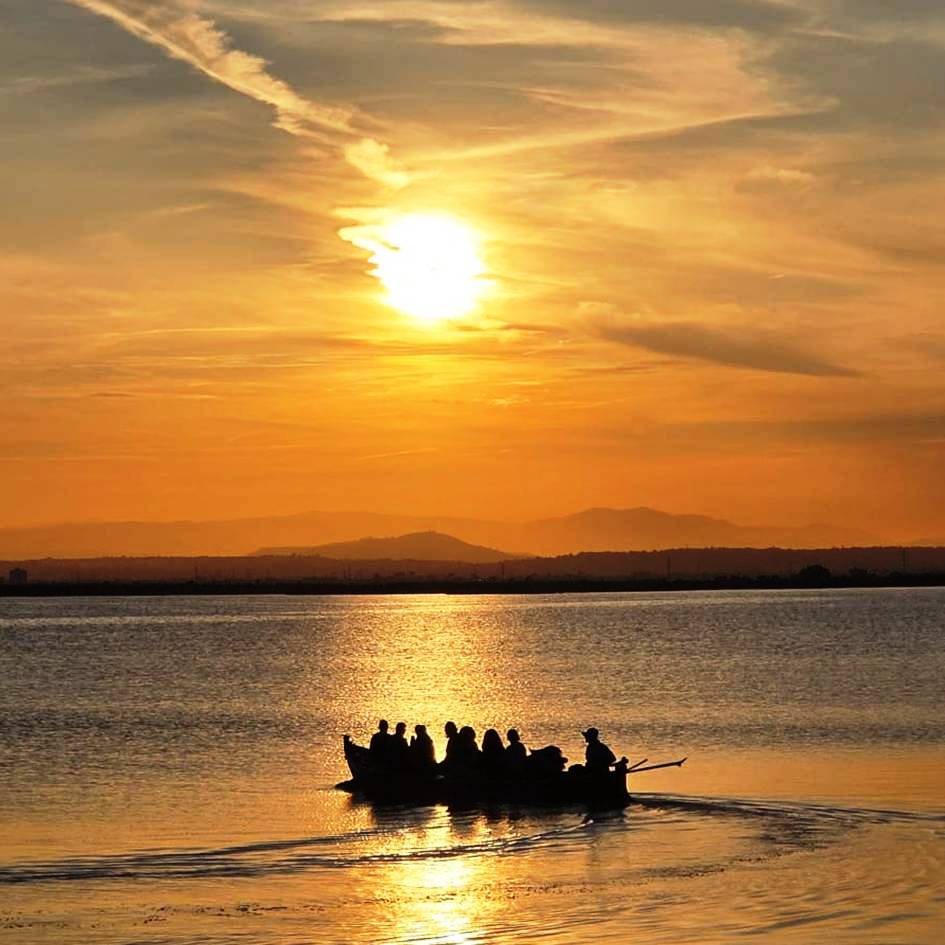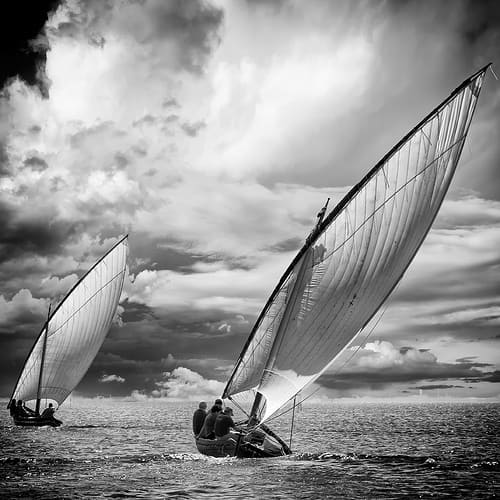

The Lake Albufera, according to its Arabic origin al-buhayra, means «little sea» or «small sea.» In some Arabic poems, it is called the Mirror of the Sun, and the Romans even knew it as Nacarum Stagnum, meaning «lake of mother-of-pearl.» These terms already give an idea of the beauty and romanticism that characterizes this place, which the Valencian writer Vicente Blasco Ibáñez set in his famous novel Cañas y barro (Reeds and Mud).
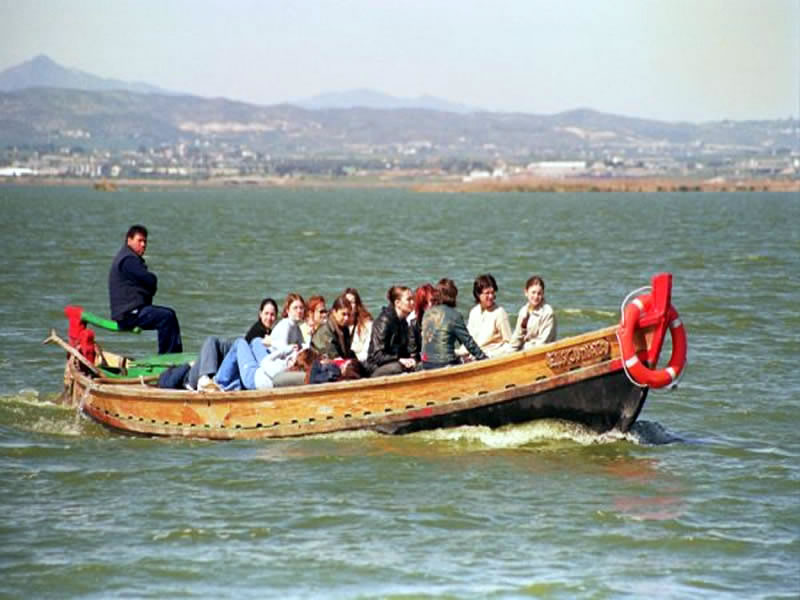
The Albufera of Valencia is one of the most representative and valuable coastal wetlands in the Valencian Community, so much so that it was declared a Natural Park in 1986. It is the largest freshwater lake in Spain, covering 3,000 hectares with an average depth of only 1.20 meters. The lake’s water comes from the Júcar River and, to a lesser extent, the Turia River. The Albufera lagoon is connected to the Mediterranean Sea through three drainage channels called «Golas,» where sluice gates are located to manage the lake’s water flow according to the demand of the rice paddies.
Its environmental value is extremely important, as it is home to endangered species such as the Spanish toothcarp (Aphanius iberus) and the European toothcarp (Samaruc), an endemic species of the Albufera lagoon.
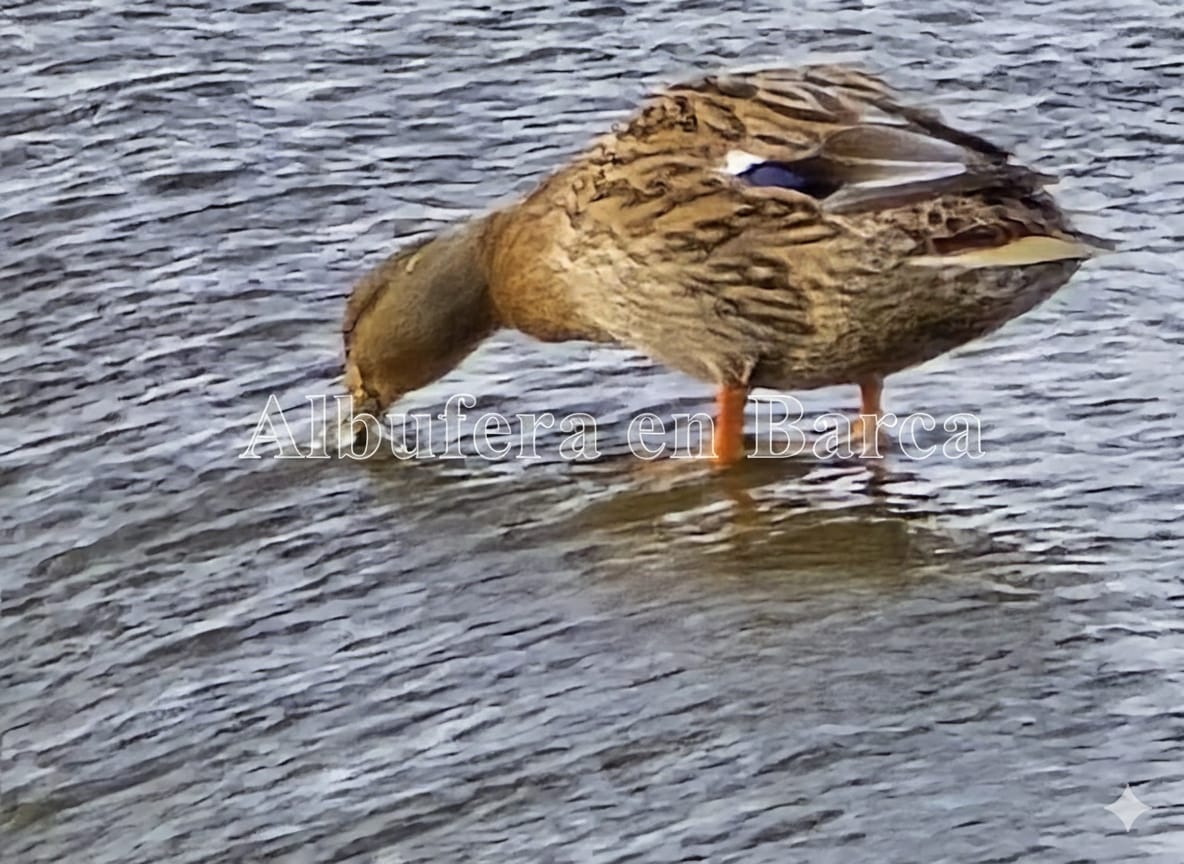
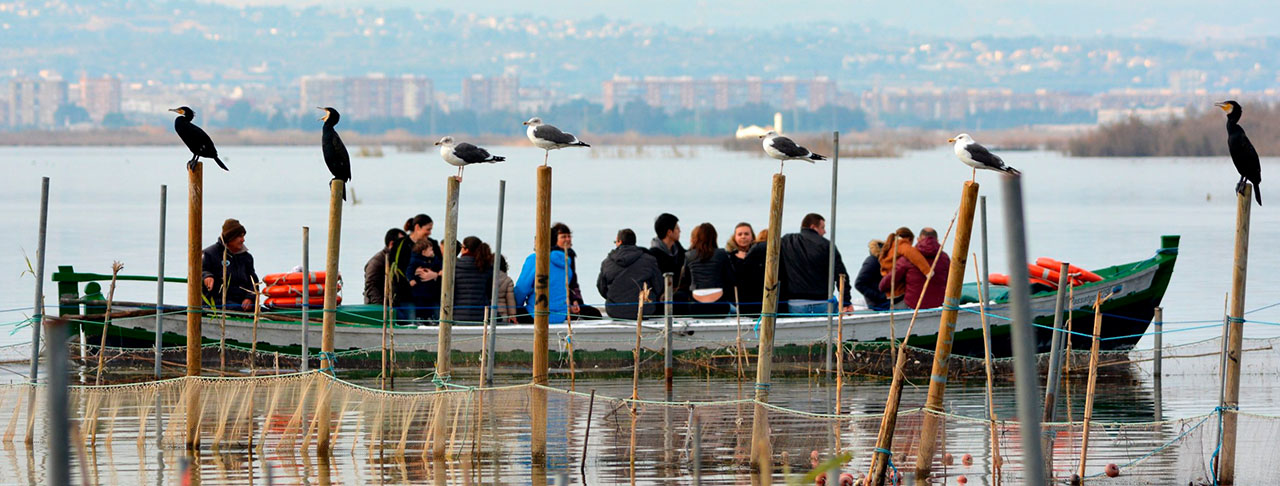
Notable fish species in the Albufera include the Spanish toothcarp, spined loach, European toothcarp, eel, mullet, and European seabass, as well as a diverse birdlife, dominated by mallards, herons, gulls, terns, the European iris, and increasingly, flamingos.
Among the flora, the most prominent are common reed, bulrush, and sedge, mostly concentrated in the so-called «matas,» six islets scattered throughout the lake that harbor dense vegetation and serve as a refuge and nesting site for birds. These islets are named Mateta de Baix, Mata de la Barra, Mata de l’Antina, Mata de San Roc, Mata del Rey, and the most important, «La Mata del Fang,» which today is the La Albufera lake’s natural bird reserve, thus harboring a great biodiversity within the ecosystem.